The Viennese school of violin making is distinguished by its elegant craftsmanship and distinctive tonal ideals. Early makers such as Anton Posch (1677–1742) and Daniel Achatius Stadlmann followed the Stainer-inspired model, producing instruments with high arching, beautifully carved f-holes, and luminous, transparent varnishes. Their work reflected the refined musical culture of Vienna’s court and chamber ensembles, where a warm, intimate tone was prized over the more powerful projection associated with Italian instruments. As time progressed, varnish colors darkened and models gradually flattened, reflecting a shift toward Italian influence—particularly visible in the work of Johann Joseph Stadlmann, who blended Viennese precision with the broader tonal ideals of Cremona.
By the 19th century, the “New Viennese School” emerged under figures like Franz Geissenhof, whose violins incorporated stronger Italian traits while retaining the Viennese focus on tonal richness and balance. The city’s makers also produced unique instrument types—such as the five-string, fretted double bass and the baryton—attuned to the repertoire of the Viennese court. Modern luthiers, including Walter Neubauer, continue this lineage, preserving the hallmark qualities of Viennese violin making: a harmonious blend of meticulous craftsmanship, elegant design, and a sound celebrated for its warmth, depth, and refined projection.
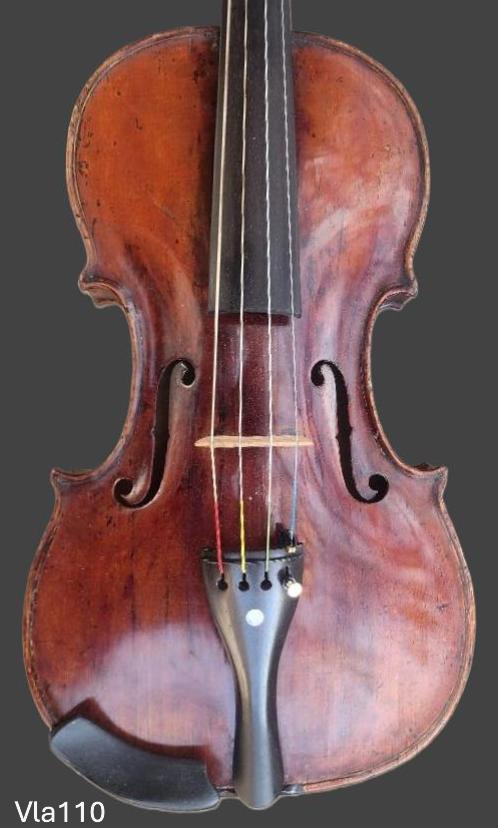
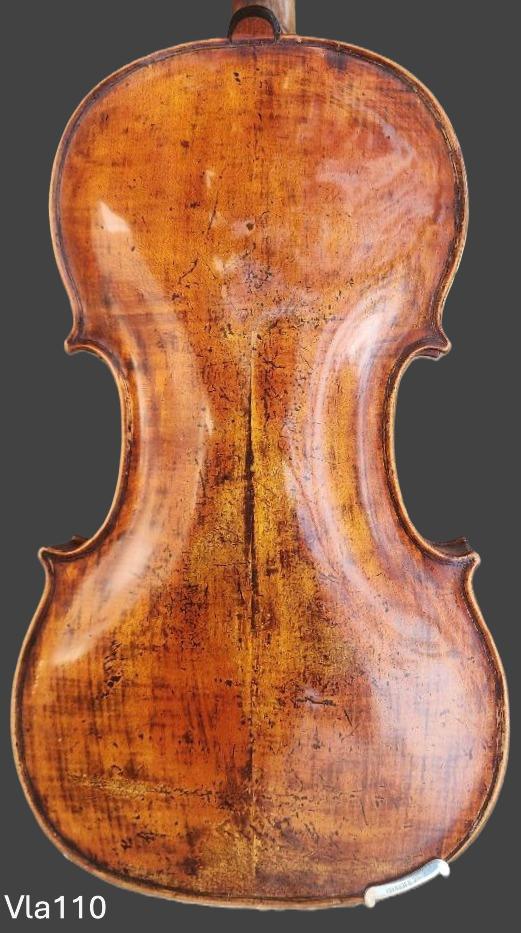
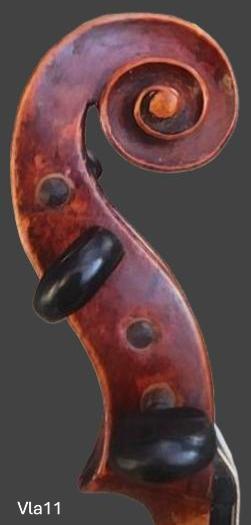
18th century Viennese, this viola is a masterpiece in design. It reflects throughout the exquisite Viennese attention to detail and craftsmanship.